We load it until it breaks — on purpose
Two ways to overload
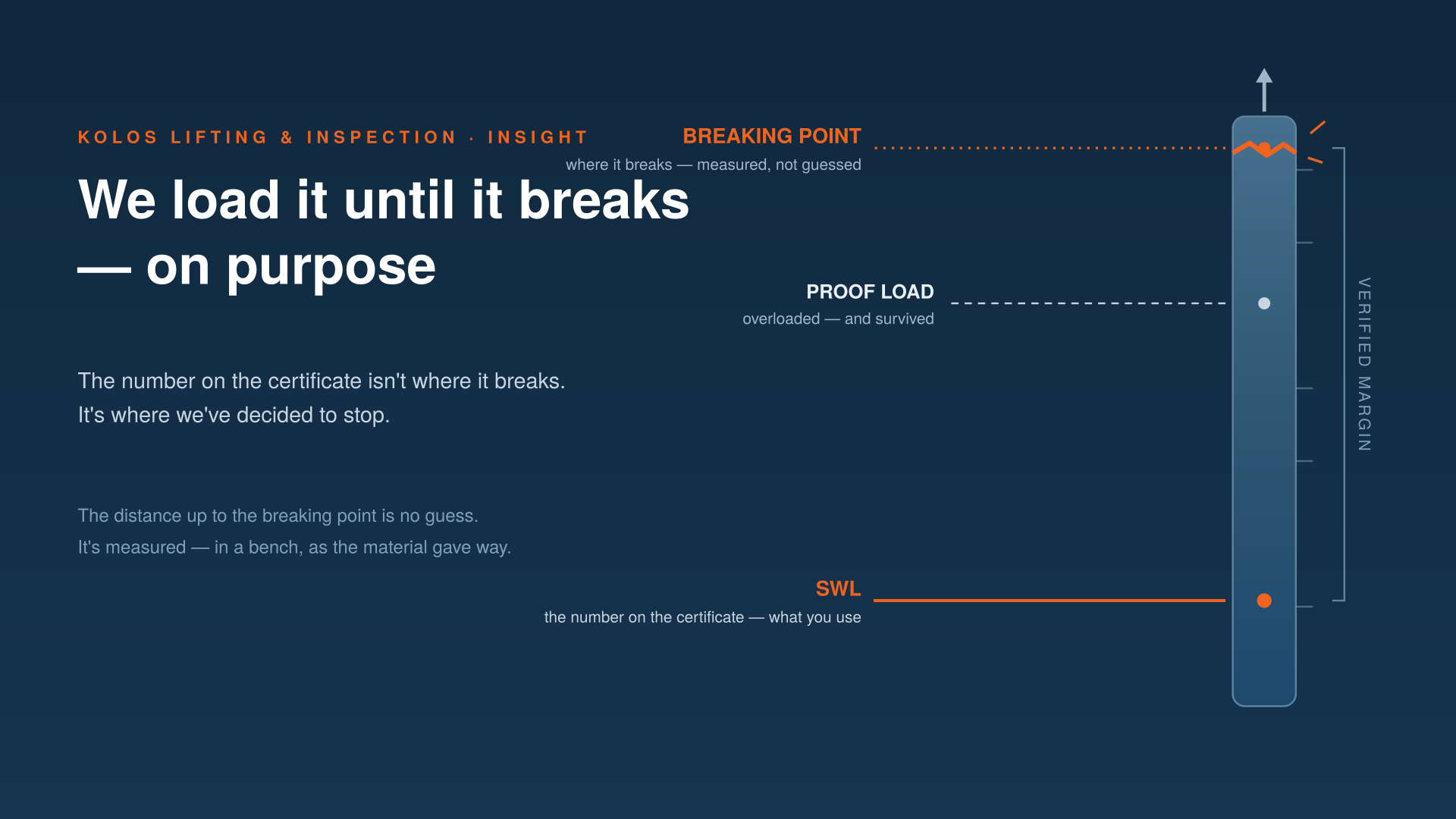
All testing of lifting equipment is about loading it harder than it will ever be loaded in service. But there are two entirely different reasons to do it and they give two entirely different answers.
Proof load testing. Here we load one specific item to a defined level above its working load, how far depends on equipment type and standard. The point is that the item must *survive*. No permanent deformation, no damage. If it passes, we know that this particular unit handles its job with margin and then it goes straight into service afterwards. This is a non-destructive test.
Destruction testing. Here we do the opposite. We take a representative sample and pull until it actually fails. We *want* it to break, because that's the only way to know exactly where the limit lies. A sling marked 5 tonnes may not break until well above 25 tonnes. That distance isn't accidental, and it isn't calculated in isolation. It's been seen, in a bench, at the moment the material gave way.
The number behind the number
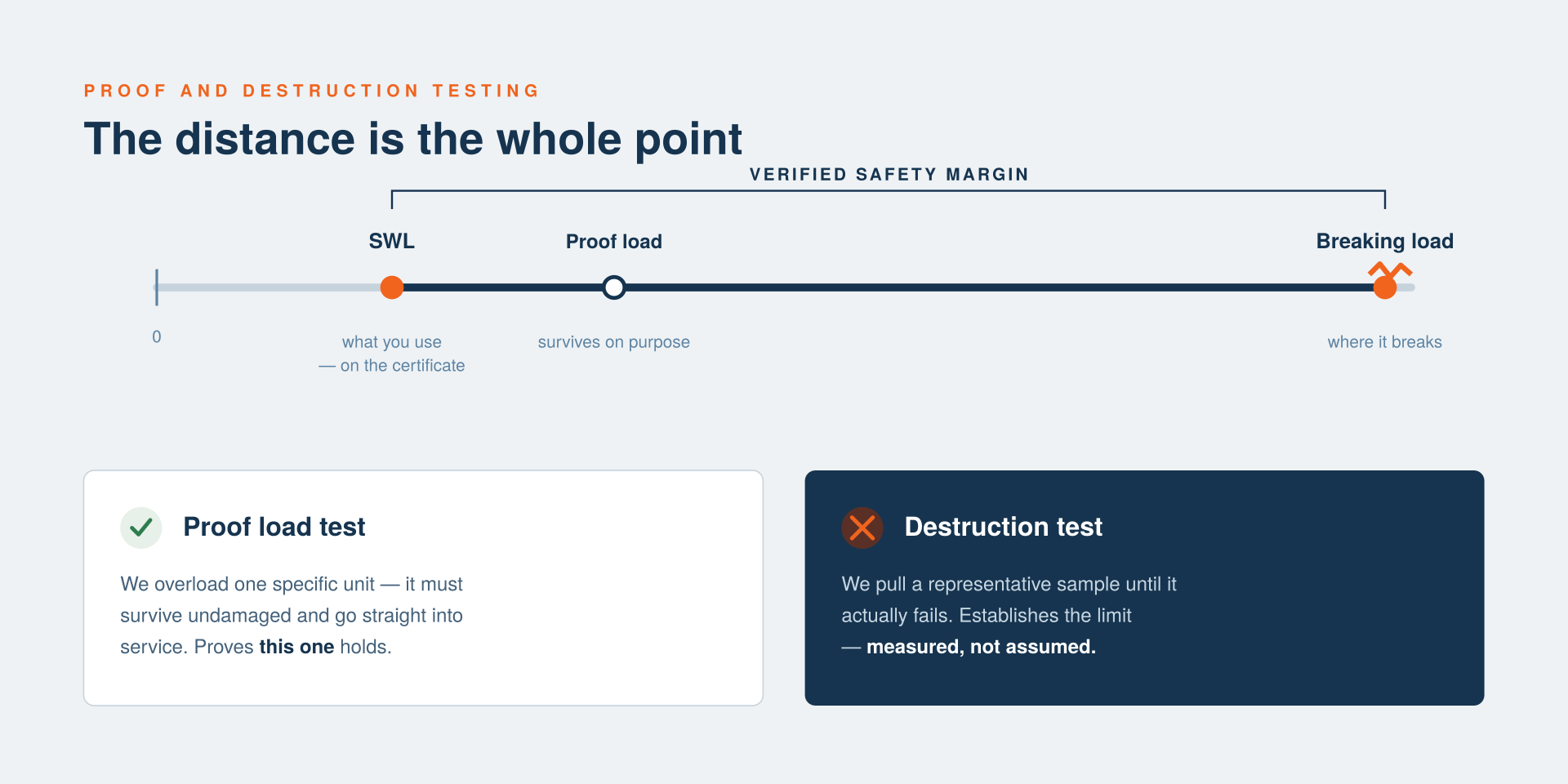
The relationship between where equipment breaks and where you're allowed to use it is called the safety factor. It varies with equipment type and standard, but some typical examples:
- Wire rope sling: around 5 : 1
- Chain sling: around 4 : 1
- Fibre and round sling: around 7 : 1
- Shackles: around 6 : 1
That means a fibre sling marked 2 tonnes is engineered to withstand somewhere in the order of 14 tonnes before breaking. In practice, you use one seventh of what the equipment can actually carry. That reserve is there for everything unforeseen, snatch loads, uneven loading, wear, age, a bad day on deck.
But a safety factor on paper is only a claim until someone has verified it. That's precisely what the destruction test does: it turns margin from theory into measured fact.
Why this concerns you - not just us
The certificate you're handed is not a piece of paper. It's the result of a physical verification; proof that the equipment has been through more than it will ever meet with you.
That matters most in three situations:
- Repaired, modified or in-house-manufactured equipment. Here, proof load testing is what separates "we think it holds" from "we know it holds".
- After an overload event. A sling can look entirely undamaged and still have lost much of its strength. The eye doesn't see it. The bench does.
- When origin is in doubt. Equipment without traceable history is equipment with an unknown margin. Testing gives you the number back.
How we do it at Kolos
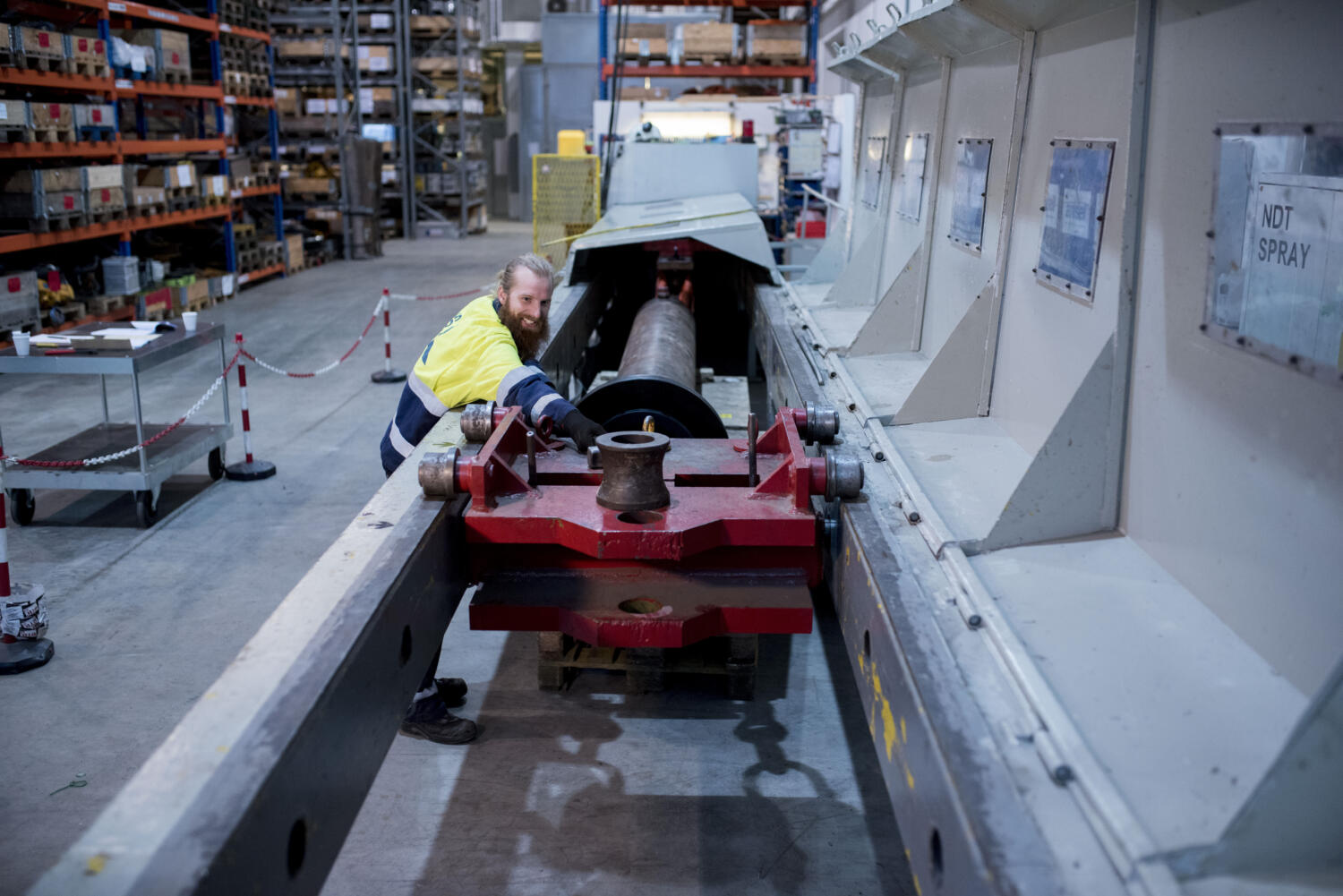
Proof and destruction testing we carry out for the vast majority ourselves, in our own facilities, with calibrated measuring equipment and traceable documentation in Kolos Kontroll. That gives us control of the entire chain, from the moment load is applied to the moment the certificate is signed.
For the truly extreme, very high SWL or bespoke rigs that exceed the capacity of our own bench, we draw on a qualified partner network. We stand behind what we test ourselves, and we're just as honest about when a job belongs with a partner. Both come down to the same thing: that the number on the certificate can be trusted.
Everything is carried out to prevailing standards, including NORSOK and DNV.
Wondering what your equipment can actually take?
Do you have equipment that's been repaired, modified, made in-house or exposed to an event? Then there's one place to find the answer, and it isn't on the label. Get in touch, and we'll test it.

Øyvind Josdal
Business Development Manager
josdal@kolos.no
Tel: +47 40 100 557
Need product testing or validation support?
Our team can help you find a customized testing solution that meets your technical requirements and project objectives.